

Introduction
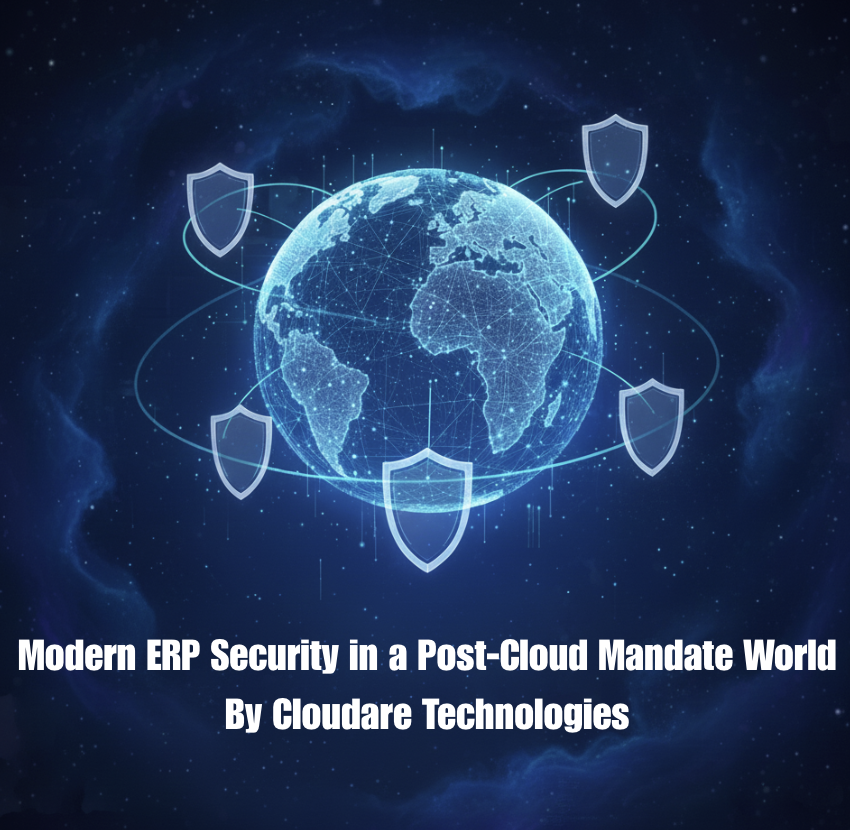
The move to Cloud ERP has evolved from an IT preference to a business requirement as multinational corporations speed up their digital transformation. ERP security is becoming the foundation of operational resilience in this post-cloud mandate world, where businesses depend on networked systems, real-time data sharing, and multi-cloud deployments.
ERP systems are no longer seen by contemporary businesses as separate financial instruments. They now serve as the backbone of corporate operations, including supply chain management, human resources, and customer interaction. ERP cybersecurity, data protection, and zero-trust architecture are crucial for every organisation as a result of this evolution, which increases exposure and opportunity.
The Cloud Mandate: A New Normal
Enterprises aren’t just “moving to the cloud” anymore; they are expected to operate in it.
A cloud mandate usually consists of:
- Converting outdated ERP to cloud-native or cloud-hosted systems
- Data centralisation for unified view
- Implementing security frameworks with zero trust
- Maintaining business operations in dispersed settings
- Maintaining adherence to international data standards
However, this mandate increases the attack surface. Previously isolated ERP environments are now highly interconnected. Numerous vendors, APIs, devices, and geolocations are all integrated. ERP security needs to advance to precisely manage this complexity.
Guidelines for Strong ERP Security Post-Cloud Migration
In a post-cloud landscape, organizations must adopt modern security frameworks to stay protected and compliant. Key guidelines include:
1. Strengthen Identity and Access Governance
Implement:
- Role-based access control (RBAC)
- Multi-factor authentication (MFA)
- Least privilege and conditional access policies
- These are essential to prevent unauthorised intrusions into critical ERP modules.
2. Implement Zero-Trust Architecture
A zero-trust security model assumes no implicit trust—every user, device, and integration must be authenticated continuously. This is critical for modern ERP cybersecurity.
3. Encrypt ERP Data Across All Channels
Organisations must encrypt data at rest and data in transit, especially when operating across hybrid cloud and multi-cloud environments.
4. Real-Time Monitoring and Threat Analytics
Modern ERP environments require:
- Automated anomaly detection
- Behavioural analytics
- Proactive compliance monitoring
This ensures insider threats and suspicious activities are flagged immediately.
5. Secure Integrations and APIs
As businesses expand their digital footprint, third-party integrations and SaaS tools increase attack surface area. Proper API governance and vendor risk assessments are essential.
Specific Information: What Makes ERP Security Different Today
ERP systems handle the most sensitive data in any organization financial records, HR data, supplier information, logistics, and customer transactions. Unlike traditional systems, Cloud ERP spreads this data across:
- Multi-cloud infrastructures
- Distributed teams
- Mobile devices and edge computing
- External vendor networks
This decentralisation intensifies the need for strong ERP data protection, multi-cloud security, and centralized monitoring.
Challenges in Post-Cloud ERP Security
1. Disconnected Security Across Multi-Cloud Platforms
As organizations adopt AWS, Azure, Google Cloud, and private cloud combinations, maintaining consistent ERP security policies becomes difficult and increases exposure.
2. Human Error and Weak Access Controls
Misconfigurations, over-permissioned accounts, or untrained employees can compromise even the strongest ERP cybersecurity frameworks.
3. Unregulated Shadow IT and Unverified Integrations
Teams often adopt apps or plugins that silently connect with ERP data, compromising cloud ERP security and creating hidden vulnerabilities.
Solutions to Overcome These Challenges
1. Centralised Security Monitoring and SIEM Integration
Implementing unified dashboards consolidates all alerts, logs, and anomalies across cloud environments ensuring strong enterprise security and visibility.
2. Automated Identity and Access Governance
Using automation to enforce RBAC, MFA, and privilege monitoring reduces human errors and strengthens access governance.
3. Integration Governance and API Security Controls
Organizations should implement strict workflows, vet third-party tools, and use API-based firewalls to safeguard ERP modernization efforts.
Helping organization to move to Cloud ERP with the help of Cloudare Technologies
Modern ERP security requires more than tools, it requires expertise, vision, and a partner who understands both the technical and business nuances of digital transformation.
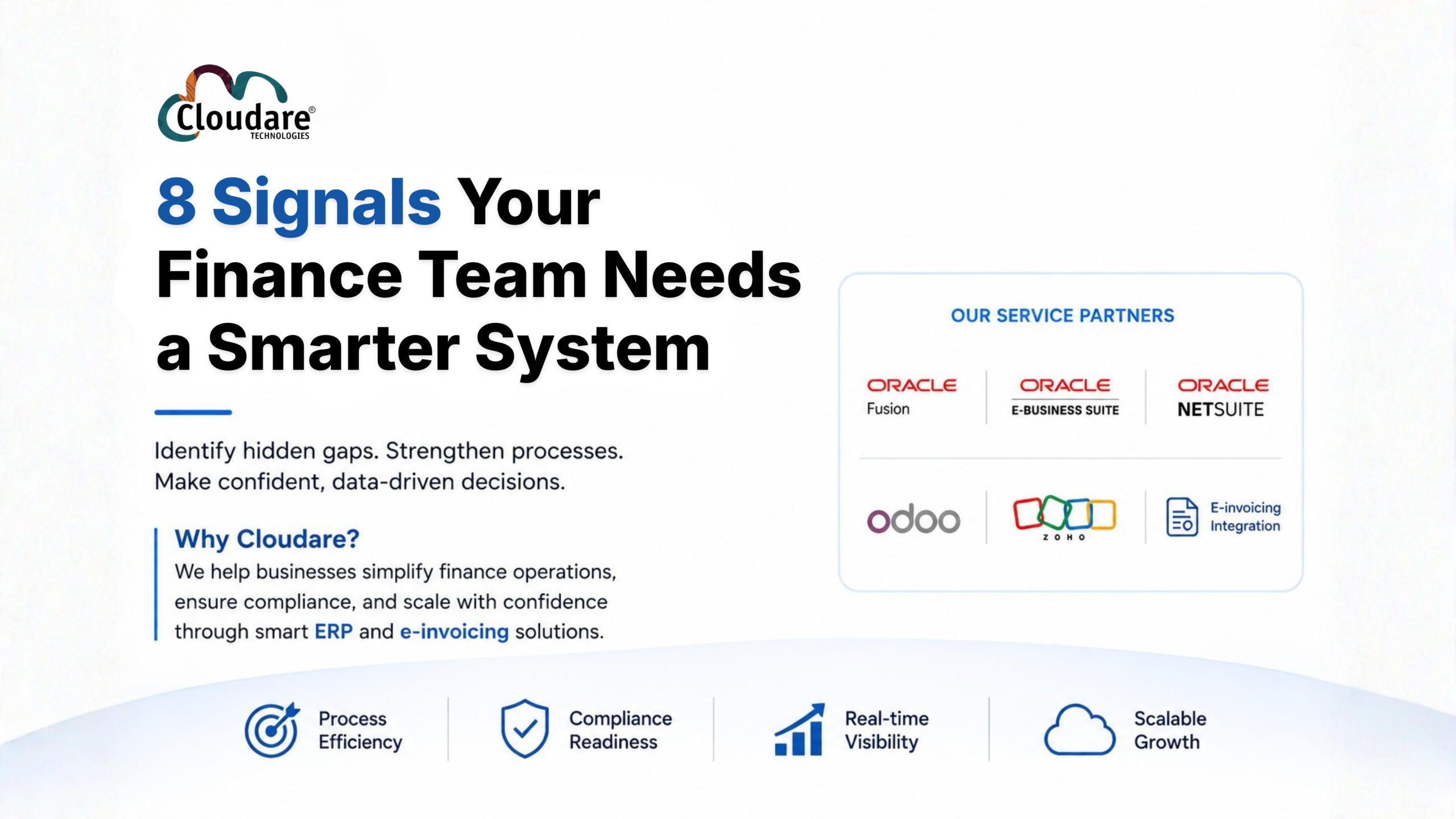
Cloudare Technologies is the official partner of Oracle, Zoho, Odoo and HostBooks, empowering businesses to secure their ERP systems with precision-built solutions for:
- Intelligent ERP management
- Advanced cloud and security automation
- Integration governance
- Real-time monitoring and analytics
- End-to-end digital transformation
If you’re ready to strengthen your ERP security for the future, we’re here to help.
📩 Email: sales@cloudare.in
🌐 Website: www.cloudare.in
Let Cloudare Technologies be your trusted partner in building secure, scalable, future-ready enterprise ecosystems.



Leave a Reply
You must be logged in to post a comment.